Scalp Ringworm in Children: What Salons and Barbers Should Do. A Tinea Capitis Guide for Stylists
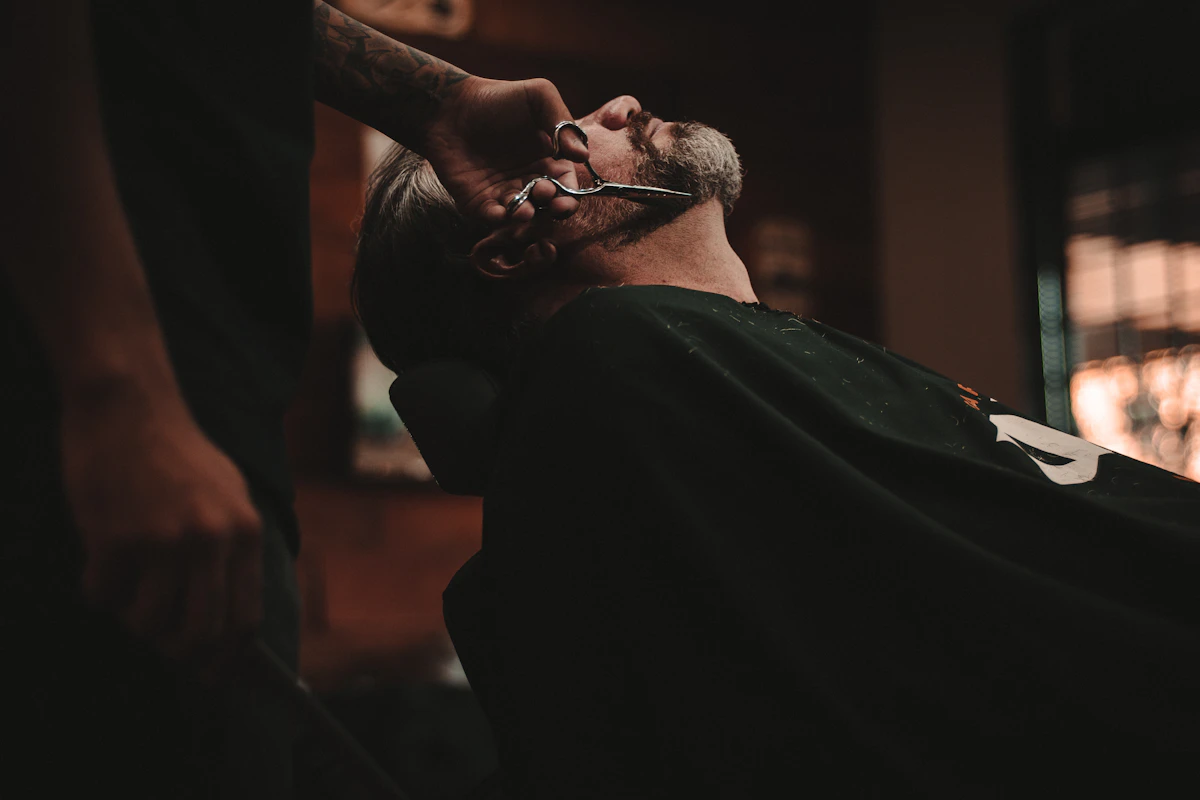
It is Saturday morning and a parent brings in their eight-year-old for a trim. As you section the hair at the crown, you notice a round patch, about the size of a two pence coin, where the hair looks broken off close to the scalp. The skin there is grey and scaly, and the child keeps scratching it. The parent says: "It's just dry scalp, isn't it? She's had it a few weeks. Can you just cut round it?"
That is the question behind this guide. Is it dry scalp, dandruff, a patch of alopecia, or something infectious that should not be cut, brushed or clippered today? And what does the salon actually do next, with the client in the chair, a parent watching, and a full column of bookings behind them? The condition you are most often being asked to think about in this scenario is tinea capitis, better known as scalp ringworm.
This guide is written for UK stylists, barbers, children's hairdressers and salon owners. It covers what scalp ringworm is, why it matters in a salon, what it can look like at the chair, how it compares with the other causes of scaly patches and hair loss in children, what to say to parents, how to handle tools and the workstation afterwards, and when clients can come back. You will not be diagnosing anyone. The aim is to notice, pause the service, advise calmly within your role, clean properly and refer.
Short answer: scalp ringworm (tinea capitis) is a contagious fungal infection of the scalp hair and skin. It is most common in children but can occur in adults. It can look like dandruff, alopecia, eczema or psoriasis, so a stylist cannot confirm it by looking. If you see a scaly patch with broken hairs or hair loss, especially in a child, the safest course is to pause the service, explain kindly that it needs checking by a pharmacist or GP, and clean and disinfect everything that touched the hair. The NHS says scalp ringworm usually needs prescription antifungal tablets and shampoo, so this is not something salon products or a trim can fix.
Why this matters for salons and barbers
Most scalp conditions a stylist meets are not contagious. Dandruff, seborrhoeic dermatitis, psoriasis, alopecia areata and pattern hair loss cannot be passed from one client to the next on a comb. Scalp ringworm is different. The British Association of Dermatologists (BAD) says tinea capitis is contagious and spreads through close contact with an infected person, or by sharing combs, hairbrushes, hats, clothing, towels, beds and other furniture. It also notes that the fungus can live for long periods in the environment, so infection can occur many months later.
That puts the salon in an unusual position. Your tools touch many heads a day. The BAD's self-care advice for families is explicit: do not visit the hairdresser or barber until the infection is clear, and make sure the hairdresser or barber sterilises their combs, scissors and clippers between clients. In other words, the official patient guidance already assumes the salon is part of the picture, both as a place where infection could pass on and as a place that should be cleaning properly.
There is also a business reason to get this right. Children's cuts are often a family's first relationship with a salon. A calm, informed response to a scaly patch, rather than either cutting through it or making a scene, builds a level of trust that keeps the whole family booking. A clumsy response, or a second child in the same week with the same patch, does the opposite.
What scalp ringworm actually is
The BAD describes tinea capitis as an infection of the scalp hair and the surrounding skin with a fungus. It is not caused by a worm, despite the name. It is called ringworm because it can cause a ring-shaped, scaly, red rash. The fungi involved are called dermatophytes, and the common species are Trichophyton and Microsporum. These fungi are found in humans, animals and the environment.
The NHS notes that ringworm can appear anywhere on the body, and that on the scalp it is called tinea capitis. It also points out that the rash is usually ring-shaped but may look different on the face, neck or scalp, and that the colour may be less noticeable on brown and black skin. That last point matters at the chair. On darker skin, you may not see obvious redness at all, only scale, broken hairs or a patch of loss.
Who gets it
The BAD says tinea capitis occurs most commonly in children, but it can also occur in adults. The BAD also lists animals such as dogs, cats, horses and farm animals as possible sources, and the NHS advice includes taking a pet to the vet if it might have ringworm, for example if it has patches of missing fur. So a family pet, a sibling, a school friend or a shared hairbrush can all be part of the story.
What it can look like at the chair
The difficulty is that scalp ringworm does not always look like a neat ring. The BAD says its appearance can vary and can resemble dandruff, alopecia, eczema or psoriasis of the scalp. That is exactly why stylists should not try to tell these apart by eye. What you can do is recognise the combination of signs that should make you stop and suggest a check.
Signs that should make you pause
- A scaly patch on the scalp together with hair loss or broken hairs, especially in a child. The BAD says tinea capitis is suspected when there is a combination of scaly scalp and hair loss, especially in children.
- Patches where the hairs look snapped off close to the scalp, sometimes described as stubble or dots. The BAD explains that bald patches can occur because infected hairs are brittle and break easily.
- Itching, redness and dryness of the scalp, which the BAD lists as symptoms. Remember that redness may be hard to see on brown and black skin.
- A ring-shaped, scaly rash on the scalp, neck, face or elsewhere on the body. The NHS describes the rash as red or darker than the surrounding skin depending on skin tone, and possibly scaly, dry, swollen or itchy.
- More than one patch, or a patch that the parent says has been growing or spreading.
- Similar patches on a sibling, or a parent mentioning that other children at school have something similar.
Signs that need prompt medical attention
The BAD describes more severe cases with pustules (white or yellow headed spots), yellow crusts and matted hair. Very rarely there is a painful, boggy, soft spongy swelling filled with pus with hair loss over it, called a kerion. In these cases the person may have a fever or swollen, painful glands in the neck. If you see a swollen, painful, oozing or crusted area, or the child seems unwell, do not touch it further. Stop the service and advise the parent to contact their GP promptly.
A practical rule for the salon floor: scaly patch plus broken hairs or hair loss, particularly on a child, means pause, do not cut, brush or clipper through it, and suggest a pharmacist or GP check. You do not need to be sure what it is to make that call.
Comparison table: scaly patches and hair loss in children
Read each row as: condition / what you may notice at the chair / contagious? / what the salon does. This is a practical aid for stylists, not a diagnostic tool. Several of these can look alike, which is the whole reason the salon response is to observe and refer rather than guess.
- Scalp ringworm (tinea capitis) / Scaly patch with broken hairs or bald areas, itch, redness or dryness, sometimes a ring shape; rarely pustules, crusts or a painful boggy swelling / Yes, through close contact and shared combs, brushes, hats, towels and bedding, and from some animals / Pause the service on the day, advise a pharmacist or GP check, clean and disinfect all tools, linen and surfaces, rebook once treatment is under way and the parent is happy to return
- Dandruff / Loose white or yellowish flakes spread across the scalp, usually without patches of broken hair or bald areas / No / Usually fine to continue; if there is also patchy loss or broken hairs, treat it as the ringworm row and refer
- Seborrhoeic dermatitis / Greasy, yellowish scale and redness, often along the hairline, behind the ears and on the eyebrows / No / Continue gently if the scalp is intact; suggest a pharmacist or GP if it is inflamed or not settling. See https://trichologyacademy.co.uk/education/conditions/seborrheic-dermatitis
- Scalp psoriasis / Well-defined, thicker, silvery or dry plaques that may extend past the hairline; hair usually still present through the plaque / No / Continue gently if the skin is not broken; avoid picking scale; suggest a GP if it is new or uncomfortable
- Alopecia areata / Smooth, round bald patch, usually without scale or redness / No / Continue the service; be kind and discreet; suggest a GP or trichologist. See https://trichologyacademy.co.uk/education/conditions/alopecia-areata
- Traction alopecia / Thinning and broken hairs at the edges or where braids and attachments sit, linked to tight styles / No / Reduce tension and advise. See https://trichologyacademy.co.uk/blog/traction-alopecia-extensions-braids-tight-styles-stylist-guide
- Trichotillosis (hair pulling) / Irregular patches of broken hairs of different lengths, without scale / No / Continue gently, avoid comment in front of others, suggest a GP or trichologist discreetly. See https://trichologyacademy.co.uk/education/conditions/trichotillosis
- Folliculitis / Small red or pus-filled spots around follicles / Depends on the cause / Avoid working over inflamed spots; suggest a pharmacist or GP. See https://trichologyacademy.co.uk/education/conditions/folliculitis
- Head lice / Moving lice or eggs close to the scalp, itching; not usually patchy hair loss / Yes / Follow your salon's lice policy; not the same as ringworm
The key point in the table is the last column. Only a small number of rows require you to stop the service on hygiene grounds, and scalp ringworm is the one that combines being contagious with being easy to mistake for something harmless. When in doubt between dandruff and ringworm in a child with broken hairs, behave as if it could be ringworm until someone qualified has looked.
How scalp ringworm is diagnosed and treated
You do not need to know the medical details to run a good salon response, but it helps to understand what the family will go through, so you can set expectations honestly and avoid giving advice that contradicts their doctor.
Diagnosis is a medical job
The BAD explains that a doctor may use a dermatoscope, a hand-held light with a magnifying lens, to look at the scalp. The diagnosis can be confirmed by taking skin scales or plucking hairs from the affected area and sending them to a laboratory, where they are examined under a microscope and cultured. Because fungus grows slowly, culture results can take up to six weeks. A doctor may start treatment straight away if they strongly suspect tinea capitis, and adjust it later once results are back.
Treatment is prescription tablets plus a medicated shampoo
The NHS says that for most ringworm a pharmacist is a good first stop, but that you should see a GP if you have ringworm on the scalp, because you will usually need prescription antifungal tablets and shampoo. The BAD says tinea capitis needs to be treated with oral antifungal medication, which is prescription only, and a medicated antifungal shampoo from a pharmacy to reduce spread to other people. It gives 2% ketoconazole or 1% selenium sulphide as examples of shampoos, used twice weekly.
The BAD also describes courses of oral treatment lasting several weeks, depending on the medicine chosen, and notes that repeat hair samples may be taken after treatment to check it has worked. For the salon, the practical takeaway is that this is not a quick fix and it is not something a salon shampoo, scalp treatment, oil or haircut can treat. Do not recommend salon products as a treatment for a suspected fungal infection, and do not suggest that cutting the hair short will clear it.
What happens if it is not treated
The BAD warns that untreated tinea capitis could cause permanent scarring and hair loss, and that the inflammation can lead to a secondary bacterial skin infection. This is the strongest reason to refer kindly but clearly. Saying "it's probably just dry scalp" to keep the appointment running can delay treatment for a child.
What to do on the day: a step-by-step salon response
The order below is designed to protect the child, the family, your team and your next clients, while keeping the conversation calm. Adapt it to your salon, but agree it in advance so every stylist does the same thing.
1. Stop working on the area
As soon as you notice a scaly patch with broken hairs or hair loss, stop cutting, brushing or clippering over it. Put down the tools you have been using and keep them separate from your clean tools. Do not move to the next section with the same comb.
2. Look, but do not probe
Note what you can see without touching further: where the patch is, roughly how big, whether there is scale, broken hairs, redness, spots or crusting, and whether there is more than one area. Do not scratch, pick or lift scale to have a better look.
3. Talk to the parent privately and calmly
Move the conversation away from other clients if you can. Describe what you see in plain words, explain that some scalp conditions can look alike and that a few of them can be passed on, and say that the safest thing is to have it checked by a pharmacist or GP before you carry on. Avoid naming a diagnosis as fact.
4. Decide what happens with today's appointment
For a suspected scalp infection, the usual and safest choice is to pause the service and rebook. If the cut is almost finished and the patch is well away from the working area, some salons choose to finish a small part with fresh, separate tools, but that should be a written salon policy decision, not a judgement call made under pressure. The BAD's own advice to families is to avoid visiting the hairdresser or barber until the infection is clear, so a pause is fully in line with the published guidance.
5. Clean, disinfect and launder
Treat every tool, cape, towel and surface that touched the client as contaminated. Clean and disinfect tools in line with your salon's hygiene procedures and the product manufacturer's instructions, launder towels and capes, and wipe down the chair, headrest and workstation. The BAD's self-care advice for families is to wash bedding, towels and hats at 60°C and to clean combs, brushes and hair accessories, and it specifically expects hairdressers and barbers to sterilise combs, scissors and clippers between clients. Follow your local authority and insurer requirements for disinfection.
6. Record it
Note on the client record what you saw, what you said, what you advised and what was agreed, with the date. Do not record a diagnosis. Something like "scaly patch with broken hairs at crown, service paused, advised pharmacist or GP check, tools disinfected" is enough.
7. Follow up kindly
A short, friendly message a few days later asking how the child is getting on, and offering to rebook when they are ready, keeps the relationship warm. It also gives the parent an easy route back without embarrassment.
What to say: scripts for the chair
Most parents are not alarmed by a calm, specific explanation. They are alarmed by vagueness, whispering or a stylist who looks worried. Keep the tone matter of fact and kind.
Noticing the patch
"I've just spotted a small patch on the crown where the skin's a bit scaly and some of the hairs look broken. It might be nothing much, but a few scalp conditions look very similar, and one or two of them can be passed on through combs and towels. I'd like to pause here so we can get it checked first. Is that OK?"
When the parent says it is just dry scalp
"It could well be, and you know her scalp better than I do. The reason I'm being careful is that dry scalp, a patch of alopecia and a fungal infection can all look alike, and I can't tell them apart by looking. A pharmacist or your GP can. If it's nothing, we'll book her straight back in."
Explaining why you are pausing
"If it does turn out to be a fungal infection, the official advice is to wait for treatment before haircuts, so I'd rather be safe for her and for the next children in my chair. We'll clean everything properly, and there's no charge for today."
When it has been confirmed
"Thanks for letting me know. Once she's started the treatment the doctor gave you and you're comfortable to come in, we'll book her in. If the doctor has said anything about the shampoo or how long to wait, just follow that, and tell me so I can work around it."
Phrases to avoid
- "That's ringworm." You cannot confirm it, and naming it bluntly can upset a parent and child.
- "That's dirty" or anything suggesting poor hygiene. Ringworm is common and is not a sign of neglect.
- "Just use this shampoo and it'll clear up." Salon products are not a treatment for a fungal infection.
- "I'll just clipper it short and it'll be fine." Cutting does not treat it and spreads the risk to your tools.
- Discussing it within earshot of other clients.
Coming back to the salon: what is reasonable
Parents will ask when their child can come back. You should not set medical conditions, but you can set a clear salon policy that follows the published guidance. The NHS says it is fine for a child to go to school or nursery once they have started treatment, and to let their teachers know. The BAD says children can attend school or nursery once treatment with an oral antifungal and a medicated shampoo has started, while separately advising families not to visit the hairdresser or barber until the infection is clear.
A sensible salon approach is to rebook once the parent confirms treatment is under way and the scalp is settling, to follow anything their GP or pharmacist has advised, and to use clean, freshly disinfected tools as you always should. If a parent is unsure, encourage them to ask their GP or pharmacist directly when haircuts are fine. Make the policy the same for every family so nobody feels singled out.
Preventing spread in the salon
Good everyday hygiene is your best protection, because you will not always see a patch before you start. Nearly every point below is standard good practice for any salon or barbershop, but scalp ringworm is a useful reminder of why it matters.
- A full set of clean, disinfected combs, brushes, clippers, guards and scissors for every client, never the same comb on the next child.
- Clean, freshly laundered towels and capes for every client.
- Disinfection products and contact times that match the manufacturer's instructions and your local authority or insurer requirements.
- Clipper blades and guards cleaned of hair and disinfected between clients, not only at the end of the day.
- Neck strips or a fresh towel so capes do not sit directly on the neck between clients.
- Headrests, chairs and workstations wiped down between clients.
- A clear, written policy for pausing a service when you suspect an infectious scalp condition, so the decision does not fall on a junior stylist alone.
- A short script every team member can use, so the conversation sounds the same whoever is on the floor.
The BAD notes that fungus can live in combs, hairbrushes and hair accessories, and that families should clean them with simple bleach or buy new ones. That is a reminder that hair accessories, bobbles and clips the salon lends or sells as add-ons should never be shared between children.
Adults, barbers and fade cuts
Although tinea capitis is most common in children, the BAD notes that adults can get it too. Barbers who do skin fades, clipper work and razor finishing work very close to the scalp, where scale, broken hairs and small patches are easy to see and easy to spread with clippers. The same rule applies to adult clients: a scaly patch with broken hairs or hair loss is a reason to pause, suggest a pharmacist or GP, and disinfect everything.
With adults, the conversation can be more direct, but keep it private and avoid naming a diagnosis. "I've spotted a scaly patch with some broken hairs here. A few things can cause that, including a fungal infection, so I'd recommend getting a pharmacist or GP to have a look before we go over it with the clippers."
Where this fits in a salon's scalp health offer
Scalp ringworm is not something a salon treats, but recognising it is part of a wider scalp health skill set that clients increasingly expect. The same habits, a quick scalp look at the start of every appointment, clear words for what you see, and a confident referral route, are what make a salon trusted for flaking, sensitive scalps, colour reactions and hair loss as well.
If you are building that offer, the Academy's guides on the other conditions in the table are a good next read: the flaky scalp field guide on dandruff, seborrhoeic dermatitis and psoriasis at https://trichologyacademy.co.uk/blog/flaky-scalp-dandruff-seborrhoeic-dermatitis-or-psoriasis, the patchy hair loss red flags guide at https://trichologyacademy.co.uk/blog/patchy-hair-loss-red-flags-when-to-refer, and the guide to scalp reactions after colour at https://trichologyacademy.co.uk/blog/scalp-reaction-after-hair-colour-irritation-or-allergy. For ethics and boundaries in consultations, see https://trichologyacademy.co.uk/blog/ethical-consultations.
A simple salon policy for suspected scalp infections
Use this as a starting point and adapt it with your insurer and local authority guidance.
- Every appointment starts with a brief look at the scalp, particularly for children's cuts and close clipper work.
- If a stylist sees a scaly patch with broken hairs or hair loss, a pustular or crusted area, or a painful swelling, the service on that area stops.
- The stylist explains calmly and privately, using the agreed script, and suggests a pharmacist or GP check, or prompt GP contact for swollen, painful or crusted areas or a child who seems unwell.
- No diagnosis is given or recorded.
- All tools, linen and surfaces used are cleaned and disinfected before the next client.
- The visit is recorded with what was seen and advised.
- There is no charge for a paused service, and the family is offered a rebooking once treatment is under way.
- The team is trained to recognise the signs and to have the conversation.
Training for stylists and salon teams
If you want your team to recognise scalp conditions consistently and know when to pause and refer, these Academy options are the most relevant. Prices and formats are as listed on the Academy site at the time of writing.
- Salon Trichology Essentials, £99 launch offer (usually £150), 240 minutes on demand, three modules: Recognising Common Scalp Concerns, Client Conversations That Build Trust, and Know Your Boundaries, covering common condition recognition, consultation basics and when to refer: https://trichologyacademy.co.uk/education/salon-trichology-essentials.
- Sensitive Scalps: Redness, Itching and Inflammation Explained, a £29 video module that covers early signs of inflammation and when referral is appropriate, useful for telling the stylist's role apart from the doctor's when a scalp is red, itchy or scaly: https://trichologyacademy.co.uk/education/videos/sensitive-scalps.
- Hair Loss Assessment and Client Communication, £250, for senior stylists and practitioners who run longer consultations and difficult conversations about hair loss: https://trichologyacademy.co.uk/education/hair-loss-assessment-communication.
- In-person workshops for salon teams, including the Salon Scalp Health Consultancy workshop: https://trichologyacademy.co.uk/education/workshops/salon-scalp-health-consultancy.
- The free Consultation Workflow quiz, a quick check on how your team runs the consultation and referral side: https://trichologyacademy.co.uk/quiz/consultation-workflow.
All Academy training is listed at https://trichologyacademy.co.uk/education, the video library is at https://trichologyacademy.co.uk/education/videos, and the condition library is at https://trichologyacademy.co.uk/education/conditions. For clients who need a trichology appointment for hair loss or ongoing scalp concerns once any infection has been treated, see the clinic at https://trichologyacademy.co.uk/clinic.
Questions to ask before you buy any training on this topic
- Does it teach recognition of infectious and non-infectious scalp conditions, and what each means for the service?
- Is it clear about the stylist's role and when to refer, rather than suggesting salons can treat medical conditions?
- Does it give stylists words for the conversation with parents and adult clients?
- Does it cover tool and workstation hygiene in practical terms?
- Does it rely on named, public clinical sources rather than marketing claims?
FAQ
What is scalp ringworm?
Scalp ringworm, or tinea capitis, is a fungal infection of the scalp hair and the surrounding skin. The BAD says it is not caused by a worm and is called ringworm because it can cause a ring-shaped, scaly, red rash. It is caused by fungi called dermatophytes.
Is scalp ringworm contagious?
Yes. The BAD says it spreads through close contact with an infected person, or by sharing combs, hairbrushes, hats, clothing, towels, beds and other furniture, and it can also be caught from infected animals. This is why salons pause the service and disinfect tools when they suspect it.
Is it only children who get it?
No. The BAD says it is most common in children but can also occur in adults.
Can a stylist tell scalp ringworm from dandruff?
Not reliably. The BAD says tinea capitis can resemble dandruff, alopecia, eczema or psoriasis, and diagnosis is confirmed by laboratory testing of skin scales or hairs. A stylist can notice the warning combination of a scaly patch with broken hairs or hair loss and suggest a check.
Should I cut a child's hair if I think they have ringworm?
The safest course is to pause the service and suggest a pharmacist or GP check. The BAD advises families not to visit the hairdresser or barber until the infection is clear.
Can salon shampoos or treatments clear it?
No. The NHS says scalp ringworm usually needs prescription antifungal tablets and shampoo, and the BAD says it needs oral antifungal medication plus a medicated antifungal shampoo. Do not recommend salon products as a treatment.
How should I clean my tools afterwards?
Clean and disinfect all combs, brushes, scissors, clippers and guards in line with your salon's procedures and the disinfectant manufacturer's instructions, launder towels and capes, and wipe down the chair and workstation. The BAD expects hairdressers and barbers to sterilise combs, scissors and clippers between clients.
When can the child come back for a haircut?
Follow what their GP or pharmacist has advised. The NHS and BAD say children can return to school or nursery once treatment has started, while the BAD advises avoiding the hairdresser or barber until the infection is clear. A sensible salon policy is to rebook once treatment is under way and the parent is comfortable, using freshly disinfected tools.
Can scalp ringworm cause permanent hair loss?
The BAD says untreated tinea capitis could cause permanent scarring and hair loss. That is why prompt referral matters.
Sources
- British Association of Dermatologists, Tinea capitis patient information leaflet: https://www.bad.org.uk/pils/tinea-capitis/
- NHS, Ringworm: https://www.nhs.uk/conditions/ringworm/
- The Trichology Academy condition library: https://trichologyacademy.co.uk/education/conditions
This article is general education for hair professionals, not medical advice. Stylists do not diagnose scalp conditions. If you suspect an infection, pause the service, suggest a pharmacist or GP check, and clean and disinfect your tools. For training on recognising scalp conditions and referring with confidence, start with Salon Trichology Essentials: https://trichologyacademy.co.uk/education/salon-trichology-essentials.
Ready to improve your scalp health?
Whether you need professional guidance or want to learn evidence-based scalp care techniques, Lorraine can help you find the right path.
Not sure where to start?
Interested in training?
Explore video courses, structured training programs, or discuss bespoke workshops for your team.
Explore training optionsNeed a personal consultation?
In-person hair and scalp visits are in Knutsford. Booking is by enquiry or phone, with a reply within 24–48 hours.
Knutsford clinic